
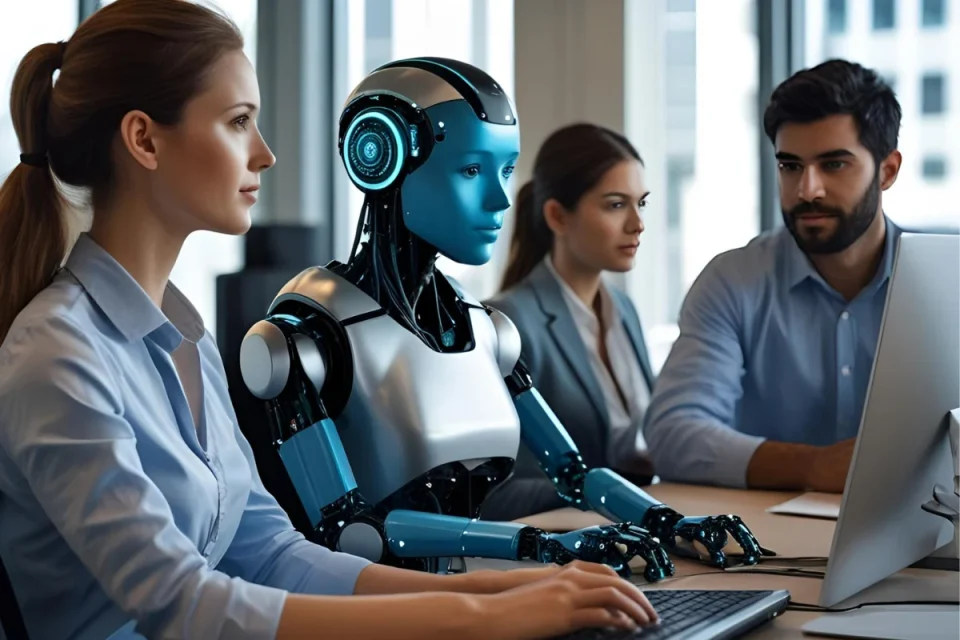
Just a few years ago, the tech industry was obsessed with a new, highly lucrative career path. Companies were rushing to hire prompt engineers, offering massive salaries to individuals who could allegedly whisper the right sequence of words into a generative AI model to coax out the perfect response. The internet was flooded with masterclasses, cheat sheets, and structural formulas teaching users how to format their requests with exact constraints, persona assignments, and step-by-step logic gates.
Today, that entire discipline is rapidly becoming obsolete.
The era of meticulously crafting paragraphs of instructions just to get a software program to do its job is ending. In its place, a new paradigm has emerged, one that fundamentally shifts how humans interact with machine intelligence. We are transitioning from static, prompt-dependent language models to context-aware autonomous agents. This evolution is not just a minor software update; it is a structural revolution in product design that is rewriting the rules of human-computer interaction.
The Short-Lived Reign of the Prompt Engineer
To understand why prompt engineering is dying, we have to recognize what it actually was: a temporary workaround for a technological limitation. Early large language models were incredibly powerful text predictors, but they existed in a vacuum. They had no memory of past interactions, no understanding of the user’s operating environment, and no ability to interact with outside software.
Because the AI was effectively suffering from anterograde amnesia and blindness to its surroundings, the human user had to provide all the missing context manually. If you wanted an AI to write a marketing email, you could not just ask for one. You had to tell the AI what your company sold, what the brand voice sounded like, who the target audience was, what the product’s value proposition was, and exactly how to format the output. You had to use magic phrases like “think step by step” or “act as an expert copywriter” just to prevent the system from hallucinating or producing generic fluff.
Prompt engineering was a symptom of a user interface failure. It placed the cognitive burden of context-gathering entirely on the human. But technology naturally trends toward lower friction, and forcing users to learn a pseudo-programming language of brackets, system prompts, and formatting rules was never going to be the endgame of artificial intelligence.
The Shift to Context-Aware Autonomy
The death knell for prompt engineering is the rise of the autonomous agent. Unlike traditional language models that passively wait for a human to type a command, autonomous agents are active, persistent, and inherently context-aware. They do not just generate text; they execute multi-step goals across complex digital environments.
An autonomous agent understands its environment without needing to be repeatedly told. It has access to continuous memory, meaning it remembers what you worked on yesterday, last week, and last month. It can seamlessly integrate with your company’s internal databases, communication channels, and software stacks. When an agent is embedded within a business infrastructure, it already knows the brand voice, the customer demographics, and the historical sales data.
From Text Generation to Goal Execution
The most profound difference between a traditional AI model and an autonomous agent is the shift from text generation to goal execution. When interacting with an agent, the human provides a destination, and the machine figures out the route.
Instead of writing a complex, five-part prompt to analyze a dataset, a manager simply says, “Figure out why our user retention dropped in Q3 and build a presentation for the board.”
To achieve this, the context-aware agent will autonomously break the request into sub-tasks. It will query the company’s analytics database, write and execute the necessary Python code to analyze the data, identify the statistical anomalies, query the customer support software to find correlating complaint tickets, synthesize those findings, generate the charts, and format a slide deck. If the agent writes a piece of code that throws an error, it reads the error log, rewrites the code, and tries again. It does all of this through internal loops of self-reflection and tool utilization, requiring zero intermediate prompting from the human user.
The Architecture of the Modern Agent
How exactly are these systems bypassing the need for heavy human prompting? The answer lies in their underlying architectural frameworks, which have moved far beyond simple text prediction.
Continuous Memory and RAG
Modern agents operate using sophisticated retrieval-augmented generation and vector databases, which grant them both short-term and long-term memory. When you ask a question, the agent does not just look at your immediate words. It simultaneously searches its memory for every relevant conversation, document, and data point associated with your account. It pulls this context into its working memory instantly. Because the agent is already holding all the necessary background information, the human only needs to state the immediate intent.
Tool Utilization and API Orchestration
Context is useless without the ability to act on it. Today’s autonomous agents are designed to be software orchestrators. They are connected to live application programming interfaces, allowing them to take real-world actions. They can read and send emails, modify customer relationship management records, trigger financial transactions, and deploy code.
When an AI has the ability to use external tools, it no longer needs the human to act as the middleman. The human is no longer required to copy output from an AI chat window and paste it into a spreadsheet. The agent simply opens the spreadsheet and does the work itself.
Real-World Impact Across Industries
This transition from prompted models to autonomous agents is causing massive disruptions across nearly every knowledge-based industry. Workflows that previously required a human to act as a “translator” between an AI model and a software application are being entirely automated.
The Evolution of Software Engineering
In software development, we are moving past the days of pasting code snippets into a browser to ask an AI to find a bug. Context-aware developer agents now live natively within the codebase repository. They monitor pull requests, understand the entire architecture of the application, and independently identify security vulnerabilities. A lead engineer can assign an open issue ticket directly to an AI agent. The agent will read the ticket, locate the relevant files, write the patch, run the unit tests, and submit a pull request for human review. The prompt is simply the existence of the ticket itself.
The Transformation of Customer Operations
Customer support has long relied on scripted chatbots that frustrate users by failing to understand nuance, inevitably forcing the customer to demand a human agent. Context-aware agents operate entirely differently. When a customer reaches out, the agent instantly accesses their entire purchase history, previous support tickets, and current shipping logistics.
If a customer says, “My package is late and I am furious,” the agent does not reply with a generic apology template. It proactively checks the logistics API, sees the weather delay in a specific transit hub, issues a proactive partial refund using the billing API, and sends a highly specific, empathetic message explaining the exact situation. The agent manages the entire resolution lifecycle autonomously, governed only by the broad operational guardrails set by human management.
The New Human Skillset: System Orchestration
If prompt engineering is dead, what happens to the humans who manage these systems? We are entering an era where the primary human skill is no longer syntax manipulation, but system orchestration and constraint management.
Working with autonomous agents is less like programming a computer and more like managing a team of highly capable, somewhat eager interns. The value of the human operator is found in defining the “why” and the “what,” while delegating the “how” to the machine.
Professionals will need to master the art of setting boundaries. This involves defining ethical guardrails, establishing budgets for API usage, creating approval workflows for high-stakes actions, and evaluating the final output against business objectives. The skill is no longer knowing how to trick the AI into giving you the right answer; it is knowing how to design a workflow where the AI can operate safely, autonomously, and effectively over long periods.
The death of prompt engineering is ultimately a democratization of technology. By removing the need for a hyper-specific communication syntax, context-aware autonomous agents make powerful computing accessible to everyone. The interface of the future is not a complex command line or a meticulously crafted paragraph of instructions. It is simply natural human intent, seamlessly understood and executed by a machine that finally knows exactly what you mean.
