
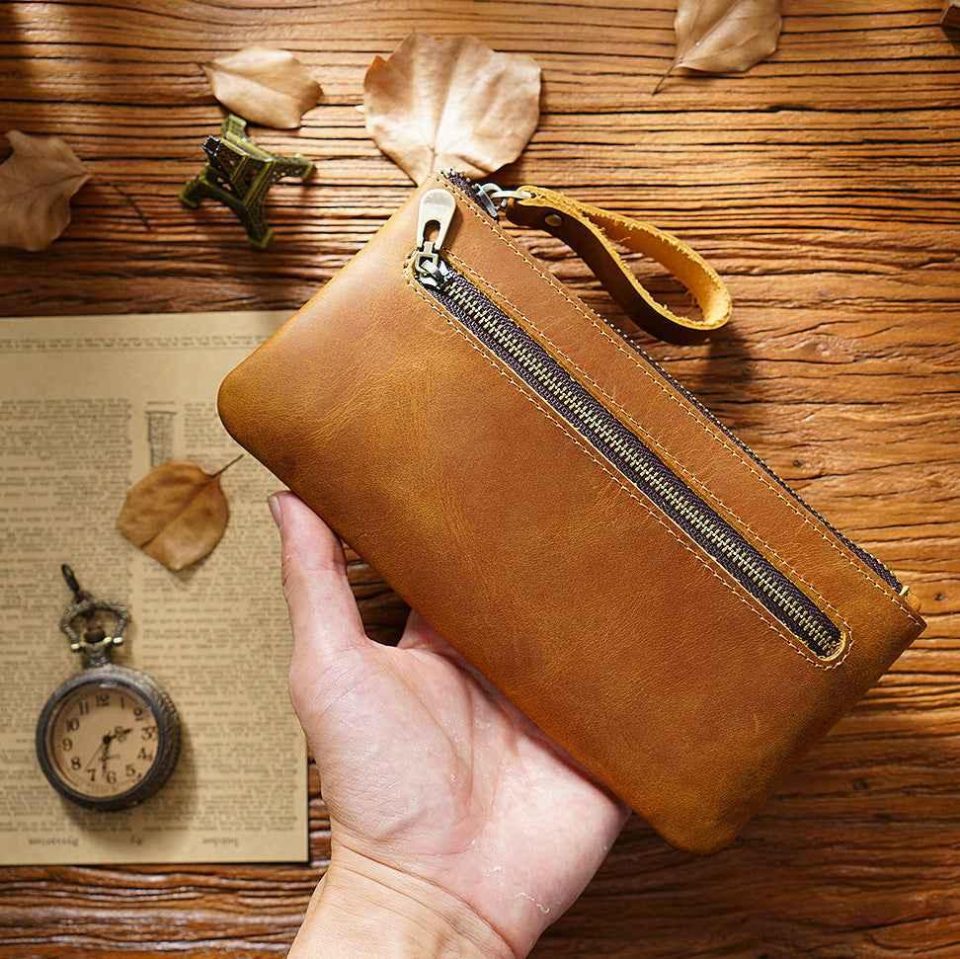
The leather pencil case versus fabric pencil case comparison is the most common material decision for anyone buying a quality stationery organiser — weighing leather’s superior durability, professional appearance, and patina development against fabric’s lower upfront cost, lighter weight, and machine washability to determine which pencil case material delivers the best daily experience and long-term value for different use profiles.
The comparison seems straightforward: leather is more durable but more expensive, fabric is cheaper but less durable. But the real-world performance gap is larger than most buyers expect. A pencil case material comparison across handling frequency, zip stress, desk abrasion, bag compression, and aesthetic trajectory reveals that leather outperforms fabric by a wider margin on every metric except two: initial purchase price and weight. For anyone who plans to use their pencil case for more than 2 years, the leather advantage is decisive.
This guide provides a direct, data-backed comparison of leather versus fabric for pencil case use, covering durability, appearance, cost per year, protection quality, and the scenarios where each material genuinely performs better.
Browse Rustic Town’s leather pencil case vs fabric collection — handcrafted, full-grain leather from $14.99 to $34.99.
Leather vs Fabric Pencil Cases: The Direct Comparison
| Factor | Full-Grain Leather | Quality Fabric (Canvas/Cotton) |
| Lifespan | 10–15 years | 1–3 years |
| Daily handling resistance | Improves — develops patina | Degrades — fades, pills, thins |
| Zip durability | Brass on leather track — 10,000+ cycles | Lightweight zip on fabric — 1,000–3,000 cycles |
| Desk abrasion resistance | Excellent — dense fibre, no wear marks | Poor — develops bald spots and friction marks |
| Pen protection | Excellent — padded, cushioned | Moderate — thin, minimal padding |
| Bag compression survival | Excellent — maintains shape | Poor — deforms permanently |
| Stain resistance | Good — wipe-clean surface | Poor — absorbs ink, graphite, food |
| Washability | Wipe clean only | Machine washable (but degrades with washes) |
| Weight | 80–150g | 30–60g |
| Professional appearance | High | Low to moderate |
| Cost per year | $1.50–$3.00 | $3–$8 |
| Patina development | Rich, warm, personalised | None — only degradation |
When Is Fabric Actually Better Than Leather?
For very young children (under 8) who lose or destroy stationery items regularly, a $5 replaceable fabric case is more practical than investing in leather that may be lost before the patina develops.
For machine-washable hygiene needs in food-service environments where the case needs sanitisation, fabric that can be machine washed is more practical than leather that can only be wiped.
For ultralight carry where every gram matters — thru-hiking, ultralight travel, competitive distance cycling — the 50 to 100g weight saving of fabric over leather is meaningful when multiplied across all carried items.
For every other use case — school, office, creative work, daily carry, professional settings, travel, gift giving — leather outperforms fabric on every metric that matters for daily pencil case use.
Explore the complete Rustic Town pencil case material comparison range — full-grain leather, handcrafted in Rajasthan.
The Cost-Per-Year Calculation That Settles the Debate
A $20 leather pencil case lasting 12 years costs $1.67 per year. A $8 quality canvas case lasting 2 years costs $4.00 per year. A $5 basic fabric case lasting 1 year costs $5.00 per year. A $3 plastic case lasting 8 months costs $4.50 per year.
Over a 10-year ownership period (typical school-to-career span), the leather option costs $20 total. The canvas option costs $40 total (5 replacements). The basic fabric option costs $50 total (10 replacements). The plastic option costs $45 total (15 replacements).
Leather is not just the best material for pencil cases — it is the cheapest material for pencil cases when measured over any timeframe beyond 3 years. The upfront premium is recouped within the first replacement cycle of any alternative.
How Do Leather and Fabric Pencil Cases Compare for Different Users?
For students aged 12 to 22: leather wins. The 10-year student career from middle school through university is the exact timeframe where leather’s longevity advantage is most compelling. One leather case survives the entire educational journey. 5 to 10 fabric replacements cover the same period at higher cumulative cost and zero patina character.
For office professionals: leather wins decisively. The professional desk context demands an accessory that communicates quality. A fabric pencil case on a corporate desk reads as temporary and student-grade. A leather pencil case reads as intentional and professional. In environments where desk accessories contribute to professional perception, the leather advantage extends beyond durability into career impact.
For artists and creatives: leather wins for the roll format that no fabric alternative matches in quality. A leather artist roll with individual tool slots, handcrafted construction, and patina character is both a functional tool organiser and a creative statement. Fabric rolls exist but lack the structural rigidity that keeps tools in position and the aesthetic character that creative professionals value.
For children under 10: fabric wins. Young children lose, destroy, and outgrow stationery accessories faster than leather’s longevity advantage can materialise. A $3 fabric case that lasts one school year before being replaced is more practical than a $20 leather case that might be lost before developing character.
The Environmental Comparison: Leather vs Fabric Over 10 Years
A single leather pencil case over 10 years represents one manufacturing cycle, one packaging unit, one shipping event, and zero landfill waste during the ownership period. The same 10-year period with fabric cases at 2-year replacement cycles represents 5 manufacturing cycles, 5 packaging units, 5 shipping events, and 4 items sent to landfill.
The environmental maths favour leather decisively for anyone who values sustainability alongside functionality. The higher initial resource investment in leather production is offset by the elimination of repeated production, shipping, and disposal cycles that fabric replacement demands. Leather is not just the quality choice — it is the sustainable choice when measured across any ownership period beyond 3 years.
The final consideration is aesthetic trajectory. On day one, a quality fabric pencil case and a leather pencil case look equally new and clean. By day 90, the fabric case has absorbed ink stains, developed zip-edge fraying, and begun the colour fading that heat and light exposure cause on dyed fabrics. The leather case at day 90 has developed grip-point warmth, desk-contact patina, and the beginnings of the personalised character that makes it visually distinctive. The aesthetic trajectories are opposite from the first month onward — one improving, one declining. That trajectory difference is the story of every subsequent month and year of ownership.
Frequently Asked Questions
Q: What is the best leather pencil case?
A: It depends on use. For students: a zippered pouch. For artists: a pencil roll. For fountain pens: a lined case with individual slots. For professionals: a slim executive case. Rustic Town offers all formats from $14.99 to $34.99.
Q: How long does a leather pencil case last?
A: A full-grain leather pencil case lasts 10 to 15 years with regular conditioning. The leather develops a rich patina from the concentrated daily handling that makes pencil cases the fastest-aging leather item most people own.
Q: Is a leather pencil case worth the investment?
A: At $1.50 to $3 per year over its lifespan, leather is cheaper per year than fabric or plastic while providing superior protection, professional appearance, and unique patina character. The investment pays for itself within 3 years.
Q: How do I care for a leather pencil case?
A: Condition every 3 to 4 months with a light leather balm. Wipe weekly to remove desk dust and graphite residue. Clean the interior quarterly. Never machine wash.
Q: Can I personalise a leather pencil case?
A: Yes. Rustic Town offers personalisation options including monogrammed initials and custom embossing, making leather pencil cases ideal for personalised gifts.
Shop the full Rustic Town best pencil case material collection — handcrafted leather pencil cases for every creative and professional need.
